
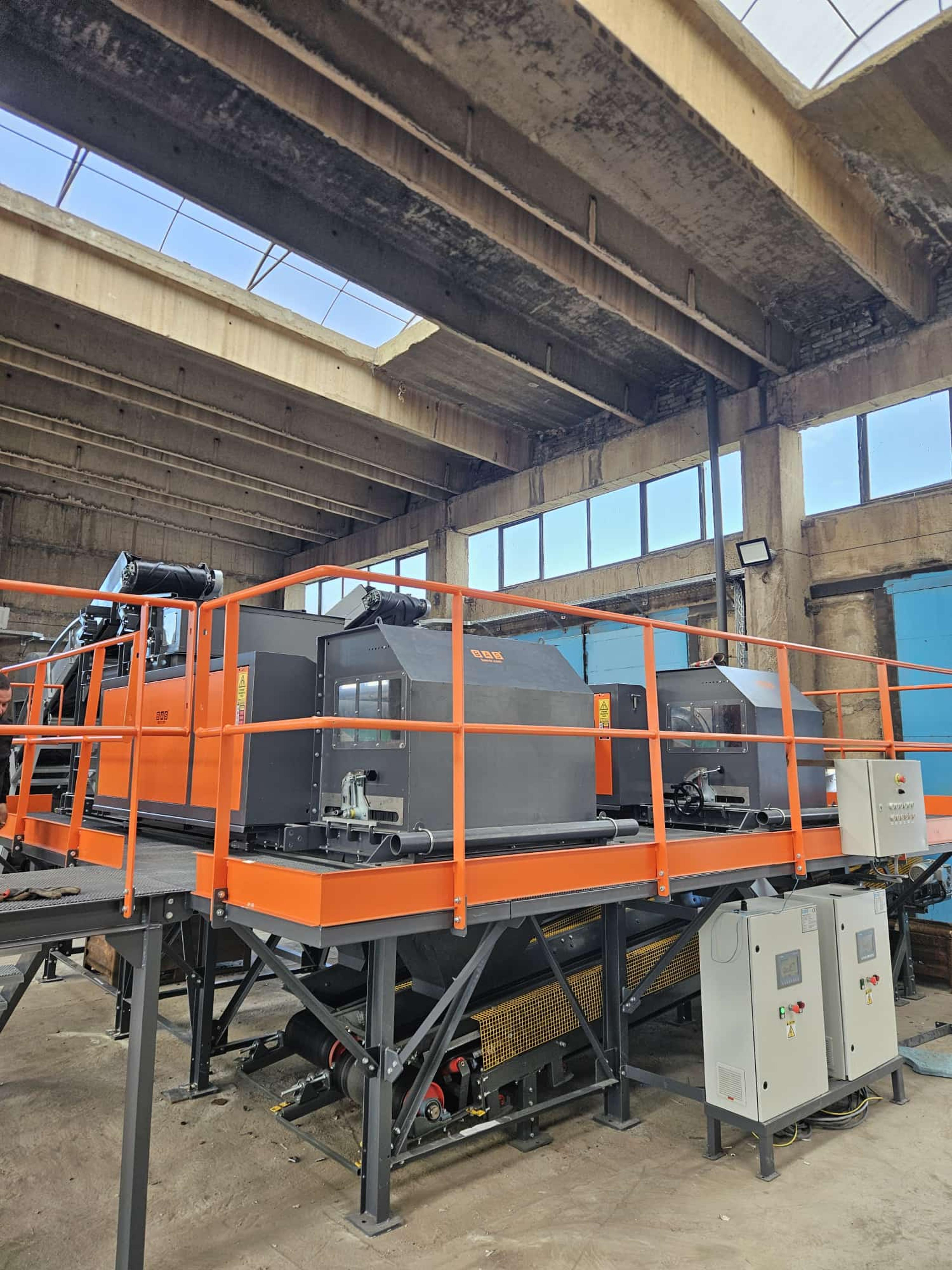
Ferrous vs Non-Ferrous Metal Separation Explained
Definitions, typical materials, separation methods, and industry examples for mixed-metal feeds in recycling and metals recovery — with field-tested equipment routes.
Ferrous metals contain iron and are usually strongly magnetic; non-ferrous metals do not contain appreciable iron and are normally non-magnetic. The split sounds simple, but it drives almost every decision in a metals-recovery plant: which separators to install, in what order, what the products are worth, and how clean they need to be. This guide explains the distinction in plain terms and shows how BAS equipment is sequenced to recover both classes profitably.
Definitions
- Ferrous metals — iron-containing alloys: carbon steel, low-alloy steel, cast iron, wrought iron, and some stainless grades (ferritic, martensitic). Most are strongly ferromagnetic and respond to overband and drum magnets.
- Non-ferrous metals — metals that do not contain iron in significant quantity: aluminum, copper, brass, bronze, zinc, lead, tin, nickel (note: nickel itself is ferromagnetic but most nickel alloys behave non-ferrously in scrap streams), and precious metals (gold, silver, platinum group).
- Special cases — austenitic stainless (304/316) is essentially non-magnetic; some duplex grades are weakly magnetic; nickel-based superalloys may behave magnetic when work-hardened.
Why the distinction matters commercially
Scrap traders price ferrous and non-ferrous bundles on different markets entirely:
- Ferrous scrap trades by mass at much lower unit prices but in large volumes; recovery is about throughput, not selectivity.
- Non-ferrous bundles trade at multiples of ferrous prices — sometimes 50–100×; recovery is about purity and metal-by-metal split.
- Cross-contamination penalties apply both ways — ferrous in aluminum melt destroys batches; non-ferrous in steel scrap depresses heat quality.
Separation techniques mapped to the metal class
Each metal class has a primary separation route and a polishing route:
- Ferrous primary — overband magnetic separators for high-throughput tramp/scalp; drum magnets for selective ferrous recovery from streams.
- Ferrous polishing — basic-type metal separators catch the small ferrous pieces that survived primary stages.
- Non-ferrous primary — eddy current separators launch aluminum, copper, brass.
- Non-ferrous polishing — stainless steel separators catch austenitic stainless missed by ECS; sensor sorting (XRT, induction, color) splits Zorba.
- Detection and safety — metal detectors flag any metal in food/plastic/glass streams where presence is the violation, not class.
Typical plant flows by industry
The exact sequence depends on what arrives at the plant gate:
- Automotive shredder residue (ASR) line — overband → drum magnet → trommel/air-classifier → eccentric ECS → sensor sort → stainless separator. End products: ferrous bundle, Zorba (further split into Twitch/Zurik), and inerts.
- Aluminum melt feed line — drum magnet (ferrous removal to <0.5%) → ECS (final aluminum polish) → metal detector before furnace charging.
- Iron and steel slag plant — see slag beneficiation plants; coarse magnetic recovery then fine wet drum or WHIMS depending on grain size.
- Aluminum slag (dross) plant — see aluminum slag beneficiation; mechanical break + magnetic + ECS to recover metallic aluminum.
- Construction and demolition (C&D) — overband at the trommel + ECS at the fines split.
- Mining concentrators — magnetic separation at the front for tramp, then within-circuit magnetic concentration if the ore is ferromagnetic; non-ferrous metal sulphides go to flotation, not ECS.
Common pitfalls
- Skipping ferrous removal before ECS — kills rotor life and aluminum purity.
- Treating stainless as ferrous — austenitic 304/316 will pass under most magnets; expect to lose it unless a stainless separator is installed.
- Underestimating tramp burden depth — magnets sized for 200 mm burden cannot reach 350 mm of mixed scrap; tramp leaks continuously.
- Overpricing the bundle — every percent of cross-contamination compresses scrap price; specifications matter more than tonnage.
Where BAS fits
BAS supplies overband magnets, drum magnets, ECS, stainless separators, and metal detectors as both standalone equipment and fully integrated lines through BAS scrap separation plants. Need engineering review? Contact the BAS team or run the separator selection wizard.
Frequently Asked Questions
What is the simplest way to tell ferrous from non-ferrous metal?
Use a magnet. Ferrous metals stick strongly; aluminum, copper, brass, lead, and most stainless grades do not. The exception is some stainless steels (ferritic and martensitic grades) that are magnetic, and nickel-based alloys that may behave inconsistently. For confidence, combine a magnet test with a density check or a quick spark/file test.
Are stainless steels ferrous or non-ferrous?
Stainless steels are technically ferrous because they contain iron, but in scrap markets they are traded as non-ferrous because they do not melt down with carbon steel and have higher prices. Magnetically, austenitic grades (304, 316) are essentially non-magnetic, while ferritic and martensitic grades respond to magnets.
Why are non-ferrous metals more valuable?
They are scarcer, more energy-intensive to produce from ore, and used in higher-value applications (electronics, transport, packaging). Aluminum and copper especially trade at multiples of carbon steel prices. Recovery from scrap is therefore highly profitable when separation is done well.
Do plastics interfere with metal separation?
Yes — composite packages (insulated wire, plastic-coated metals, electronic boards) reduce magnetic and ECS effectiveness because the metal is shielded or composite-bound. Pre-shredding to liberate the metal is usually required before high-yield separation.
Can one machine separate both ferrous and non-ferrous?
Not in a single magnetic mechanism. Plants combine a magnet (for ferrous) and an eddy current separator (for non-ferrous conductive metals) in series. Some compact lines integrate both stages into one chassis but the underlying mechanisms remain separate.